26 October 2026
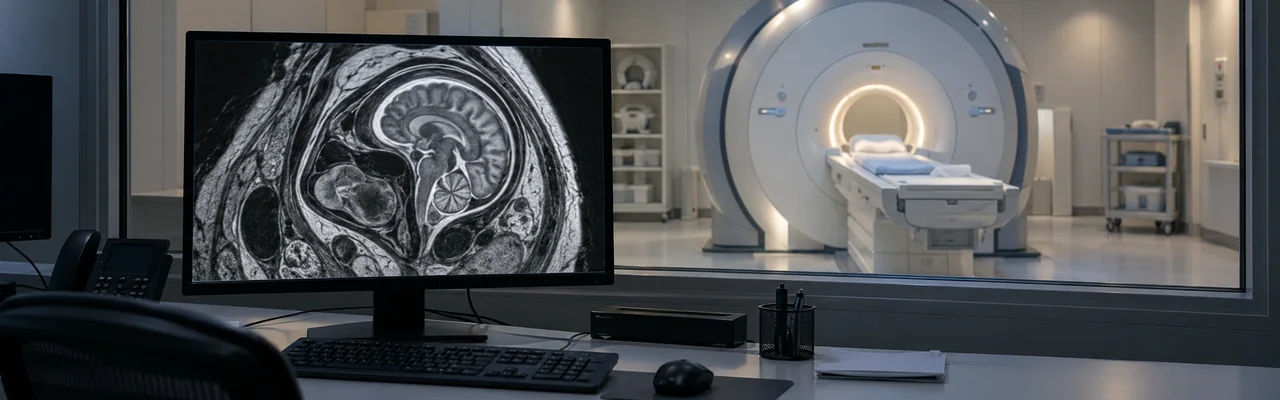
An MIT model uses physical symmetry to keep fetal brain scans sharp even when the baby won't stay still
MIT researchers, working with Boston Children's Hospital and Inria, built a model called E(3)-Pose that bakes the physical symmetry of a moving fetal head directly into its architecture rather than hoping a neural network infers it from data alone. That lets it correct for motion in fetal brain MRI scans and hand radiologists a sharp, high-resolution image without calling the family back for a repeat scan. The work was presented at the 2026 European Conference on Computer Vision.
Source: news.mit.edu →
A look at 270 million doctor queries shows how clinicians actually lean on AI day to day
Researchers at Harvard Medical School, Brigham and Women's Hospital and Mass General Brigham combed through two and a half years of usage logs from OpenEvidence, the clinical AI search tool now used by roughly 950,000 US clinicians, and found doctors ask it about treatment and management decisions more than twice as often as about diagnosis. It's a rare direct look at how AI is actually woven into everyday medicine rather than a lab demo, with nurse practitioners the heaviest users of all.
Source: healthcareitnews.com →
A one-line safety reminder made nearly every AI model tested safer at clinical decisions
Mount Sinai researchers tested 20 large language models across 501 variations of 50 real clinical scenarios and found that simply adding a brief safety reminder to the prompt cut the share of potentially harmful responses from 16.6% to 10.1%, an improvement that held in 19 of the 20 models. The lead researcher was careful to call it one cheap, real safeguard worth stacking on top of clinical oversight, not a fix for AI's deeper limits.
Source: mountsinai.org →