12 October 2026
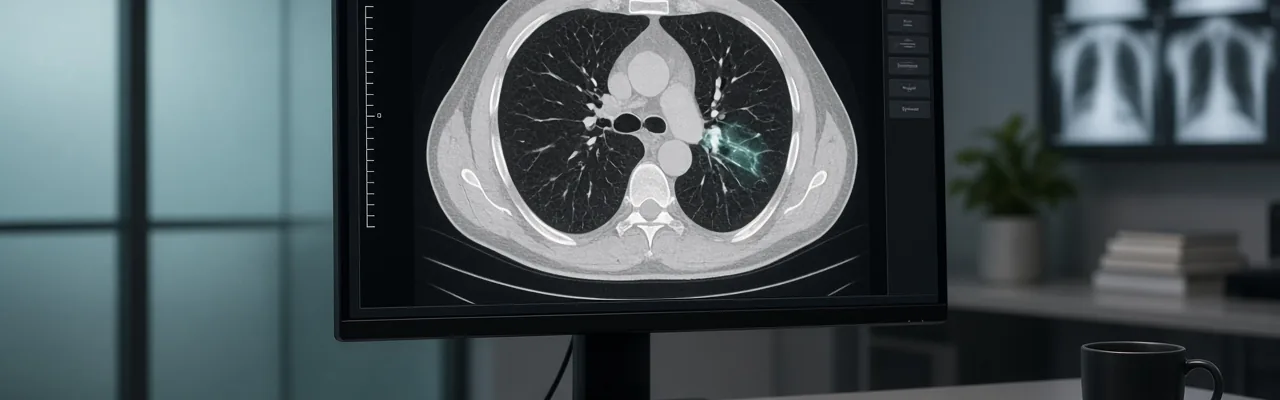
A Harvard-led dataset is teaching AI to point to exactly where it sees a problem on a CT scan
Radiology AI can flag a finding on a scan without saying exactly where it sits, leaving a radiologist to hunt for it before trusting the call. ReXGroundingCT, released by Pranav Rajpurkar's lab at Harvard Medical School and published in NEJM AI, pairs 8,028 findings described in plain-language reports, across 3,142 chest CT scans, with their precise 3D location in the scan, the first public dataset to connect free-text radiology findings to pixel-level segmentation. The aim is simple: let a model show exactly where it's looking, so a clinician can check the work instead of taking it on faith.
Source: ai.nejm.org →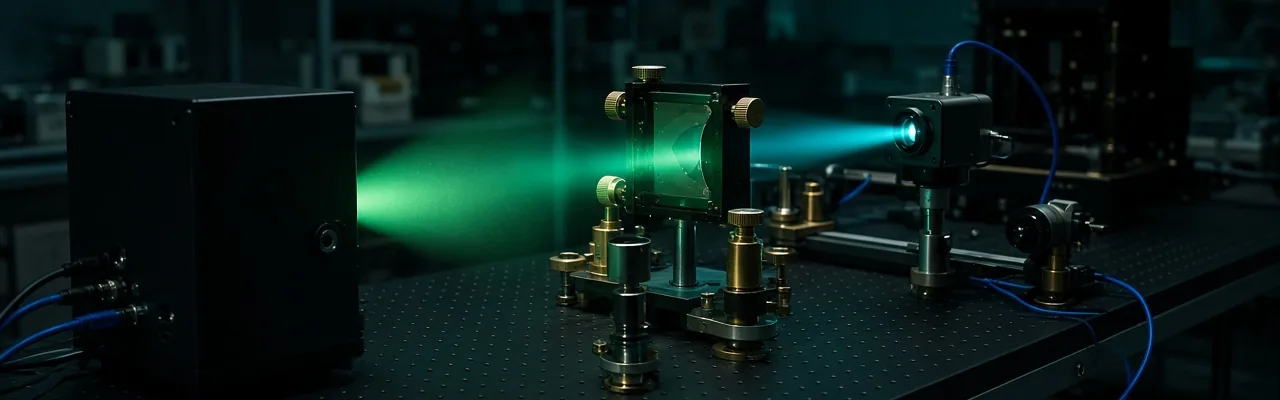
A light-powered deepfake detector from UCLA screens videos in parallel, and catches almost 98% of them
Most deepfake detectors check one video at a time, which doesn't scale to how much video is actually uploaded every day. A UCLA team built a hybrid system that uses a programmable light modulator to analyse several videos at once in a single optical pass, reaching 97.79% accuracy on a standard deepfake benchmark. Tested against videos made with Google's newer Veo 3 generator, which it had never seen in training, it still caught about 94.8% of them.
Source: sciencedaily.com →
Researchers found a cheap way to fix how AI reads text, without starting from scratch
Most language models read text in chunks called tokens, which is part of why they can struggle to spell a word out loud or spot a single typo. Models that read raw bytes instead avoid that problem, but have always lagged behind in ability. A team from the Allen Institute for AI, Cambridge, and Edinburgh published a technique in Nature on 7 October that retrofits existing models, including OLMo, Qwen3, and Llama 3, into byte-level versions for under 1% of the cost of training one from scratch, while keeping most of the original model's ability intact.
Source: allenai.org →